Sign up for my weekly email updates here, you will find out more about soap and our farmlife, straight to your inbox, never miss a post! New soap website and shop opening soon....
For some reason I've always thought that making soap seemed too hard. For a start the number of ingredients required was confusing and all the safety warnings about using the alkali put me off. The worst part for me was that most of the ingredients had to be purchased, and some even imported (palm oil and coconut oil), which never seemed very self-sufficient. I can definitely see the benefits of using homemade soap instead of mass produced soap (that often contains synthetic fragrance, colour, preservatives, and has had the glycerine removed), but it seemed to me that if I was going to buy all the ingredients I may as well just buy the soap and save myself all the hassle. For the past several years I have bought homemade soap from various market stalls and websites, and that has suited me just fine.
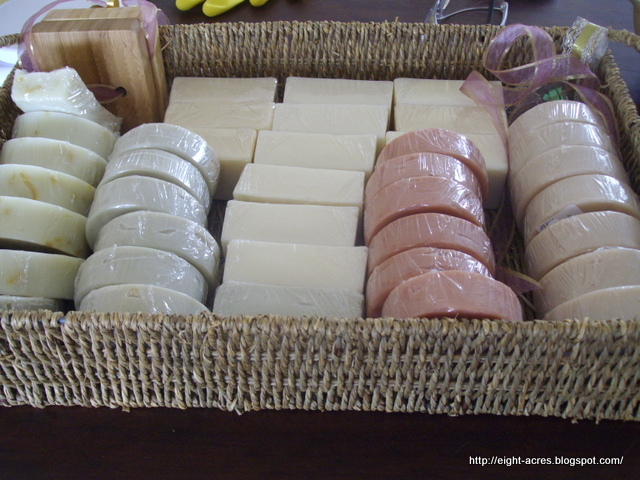 |
| soap made by my friend |
It took me a little while to work out how to render the tallow, which I discussed earlier this week. Then I found out that a friend of mine makes soap and has done for a number of years. I talked to her about using tallow and as she was always looking for cheap ingredients, she got some from the butcher to try it (at $2 for 3 kg, it is very cheap!). She then agreed to show me how to make it.
I'm not going to write about the entire process, many people with more experience have already written detailed posts about soap making in general, for example. With my friend, we used half tallow, and a quarter each of coconut oil and olive oil. Now that I know how its done, I would like to experiment with a 100% tallow soap. I have read differing opinions about tallow soap. Some say it will form a long lasting soap that cleans well, but others say that it may not lather as much without oil. However, the vegetable oil soaps tend to dissolve quickly in water and don't last as well. I would like to make the tallow soap and see if we are happy with the lather. I also made a couple of bars with no essential oil, just to see how that would smell.
Some useful links:
A post about making tallow soap here. A post about making tallow soap in the old days using the hot cooking method here. Frugal Kiwi making sheep tallow soap here.
Here's what we did:
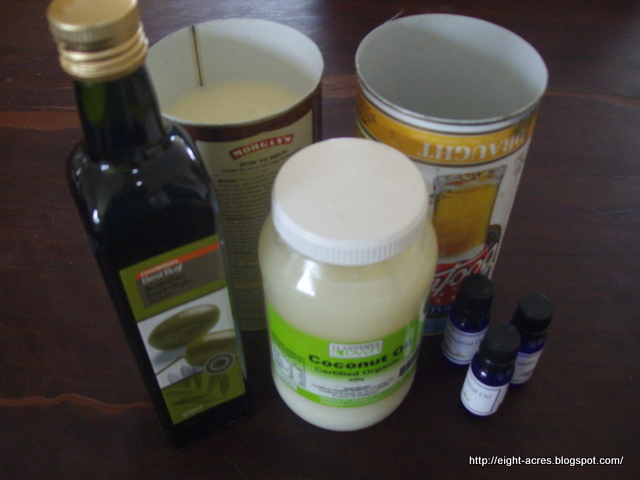 |
| The oils used - tallow, olive oil, coconut oil and lavender essential oil. |
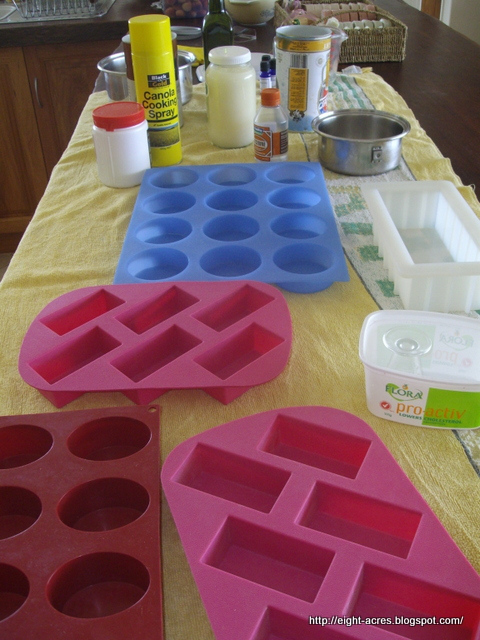 |
| all the other equipment |
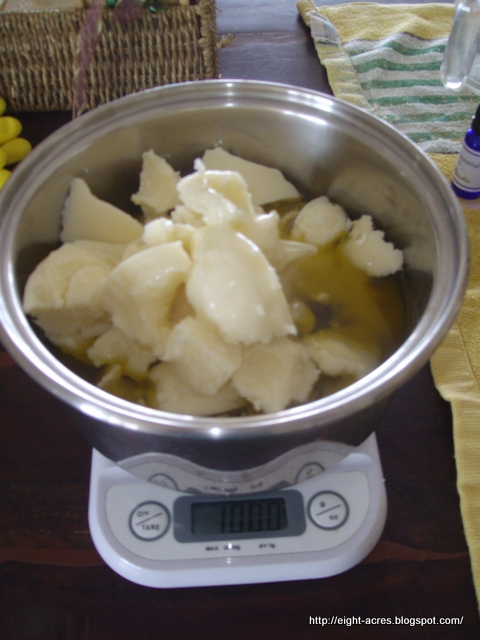 |
| weighing out the oil/fat |
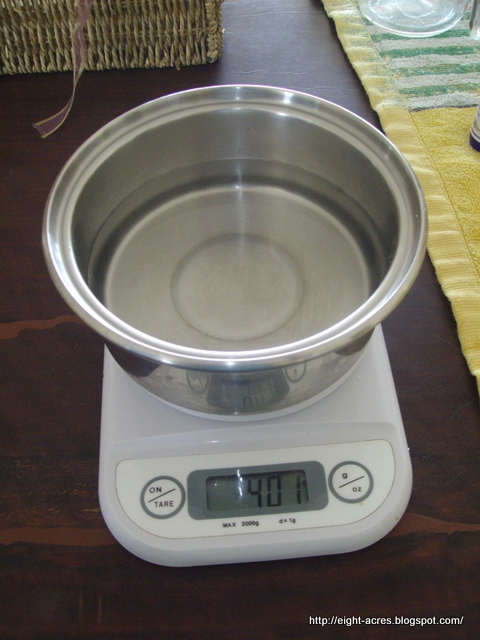 |
| weighing the water |
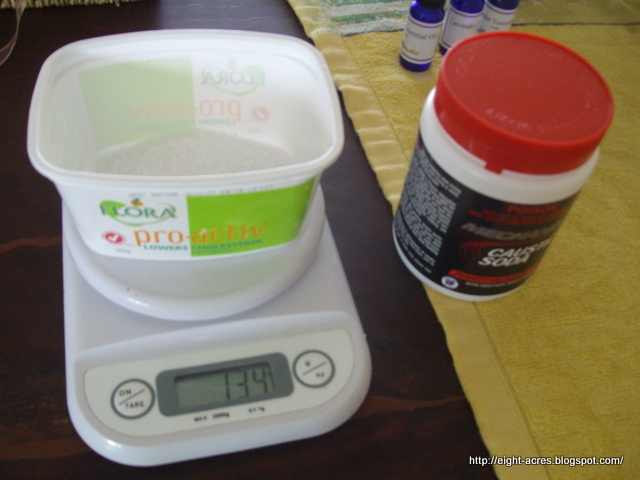 |
| weighing the lye |
 |
| mixing the lye |
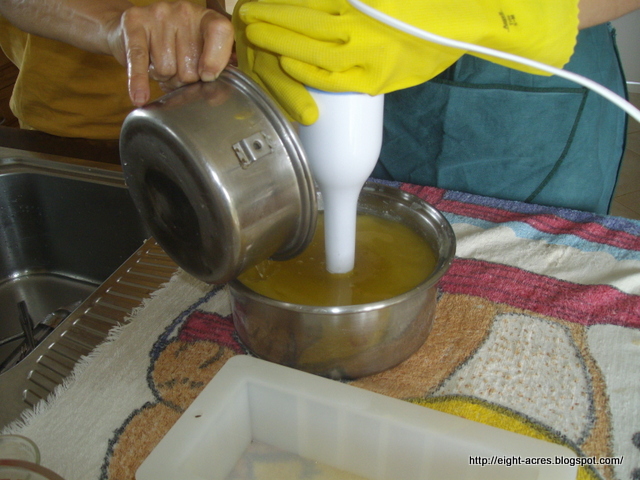 |
| adding the lye to the fat after getting the temperatures the same |
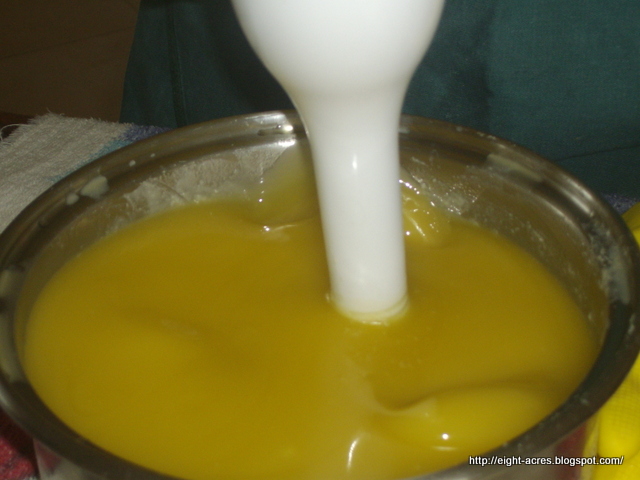 |
| mixing the soap with a stick blender |
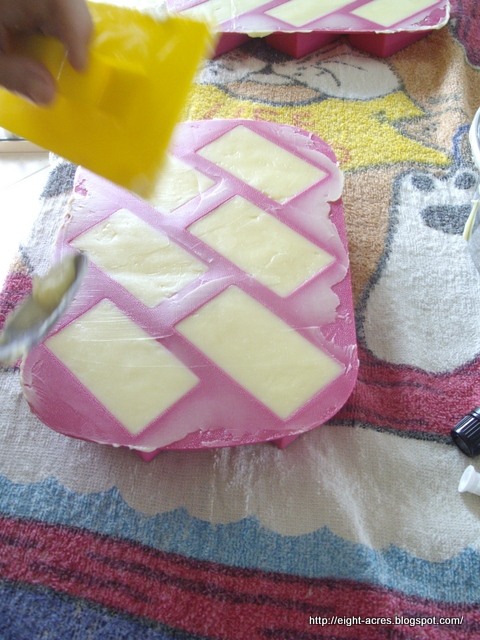 |
| smoothing the soap into the moulds |
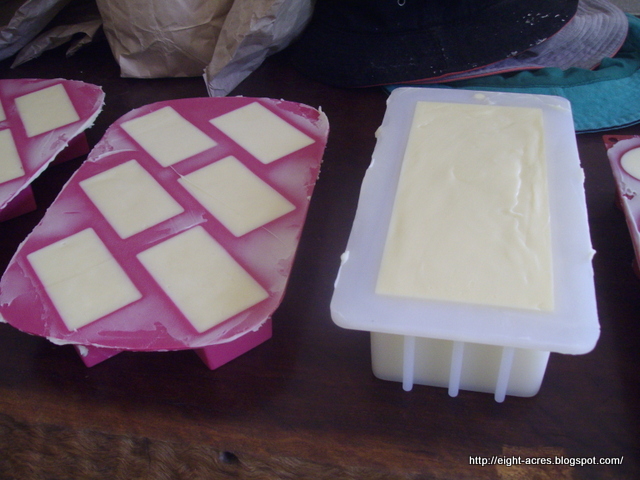 |
| leaving the soap to set |
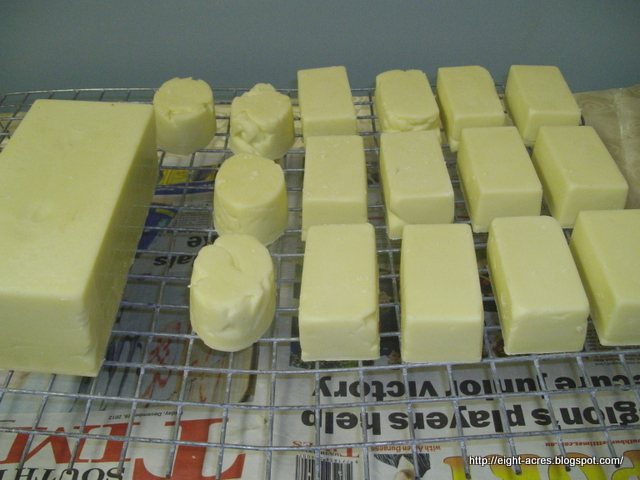 |
| Out of the molds and drying on a rack |
****
Sign up for my weekly email updates here, you will find out more about soap and our farmlife, straight to your inbox, never miss a post! New soap website and shop opening soon....
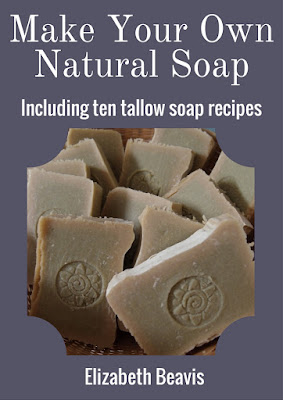
You can get all my tallow soap recipes in my eBook Make Your Own Natural Soap, more information here.
Would you like to try making your own soap from natural ingredients, but don’t know where to start?
This eBook will take you through everything you need to know to make simple soaps from natural ingredients, including herbs, clays, charcoal, oatmeal and coffee grounds.
It also explains how to use tallow in soap. Tallow is cheap and locally available, and it makes long-lasting moisturising soaps, it is an under-utilised ingredient in home soapmaking in my opinion. This eBook includes 10 recipes specifically designed for tallow soap.
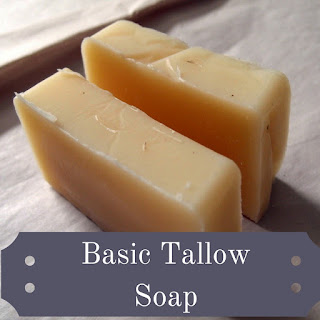
Basic Tallow Soap
Pink Clay Soap
Green Herb Soap
True Grit Soap
Black Magic Soap
Salt Spa Soap
Honey and Oatmeal Soap
Neem Oil Soap
Sustainable Shaving soap
Cleaning Soap
Formulate your own
How to rebatch a soap disaster
Why use natural soaps and salves?
Neem oil soap and salve
Shaving soap
Soap with coffee grounds
It also explains how to use tallow in soap. Tallow is cheap and locally available, and it makes long-lasting moisturising soaps, it is an under-utilised ingredient in home soapmaking in my opinion. This eBook includes 10 recipes specifically designed for tallow soap.
Basic Tallow Soap
Pink Clay Soap
Green Herb Soap
True Grit Soap
Black Magic Soap
Salt Spa Soap
Honey and Oatmeal Soap
Neem Oil Soap
Sustainable Shaving soap
Cleaning Soap
Formulate your own


How to rebatch a soap disaster
Why use natural soaps and salves?
Neem oil soap and salve
Shaving soap
Soap with coffee grounds
Oh I have long wanted to make soap - wish I had a friend to lead me through.. How wonderful if you can work it out to make it from your own tallow.
ReplyDeleteVery cool Liz...need to look to see if you've posted on rendering the tallow as well :)
ReplyDeleteOne question though: did you 'super-fat' the recipe? That means add a little extra oil so that the soap isn't too harsh on your skin. If so, you'll need to use an antioxidant if you're making more than a few bars at a time. Vitamin E or Grapefruit Seed extract work well and will ensure that the fats in your soap don't go rancid. I've heard this is especially important for tallow soaps but I use Grapefruit seed extract in all my vegetable based soaps since they'll 'go off' too. Rancid soap will still clean but it does have a bit of an unpleasant odor.
Hi Tanya, I believe that the recipe was for superfat (my friend worked out all the amounts). I'm going to try the tallow without the antioxidant at first and if I have a problem with rancid soap, I'll include it. I'm not sure yet how long the soap will have to keep, as we do use it up fairly quickly! When I make the next batch I'll write more about the recipe and working it all out (which of course you know all about, but for everyone else).
DeleteHi Liz, I don't add fancy oils although I believe they do make a more luxurious soap. I just use fats. No they don't lather but so what? You quickly get used to it and the soap still cleans well. I recently ran out of soap and used a cheap commercial soap I received as a gift. It might have lathered well but it was horrible. Good on you. You'll never go back now!
ReplyDeletethanks Linda, good to know :)
DeleteAmazing! I'd love to try this (not very manly but its another step towards self sufficiency). Your soaps look so good. I've read that I can also use tallow as a lube for some of my tools like planes etc.
ReplyDeleteTanya from Lovely Greens is on to something. Superfatting is essential - also, it makes the soap less harsh on your skin. That being said - that batch looks amazing. I love the molds! Especially the round ones.
ReplyDeleteI have never used tallow but have always wanted to try. If you want to go full tallow, you may need to adjust the temperature, and maybe add some castor oil for bubbles, but it could probably be done!
Soap making is addicting...watch out...!
yes, I've read that I may have to adjust the temp depending on the tallow melting temp, this may be advanced soap making and I'm only a beginner, but I will try...
DeleteI've been making tallow soap for a while now usually from sheep fat but today I have rendering some pig fat. I believe we should be making full use of the animal but once trying animal tallow soap we now do it for the beauty of the product itself. My husband was very fussy and would use nothing but Pears soap but now he would never go back. I make different types of pretty soap for others but for us it's pure tallow no added fragrances or oils and we love it. I have to smile when people get squeamish about tallow soap because that is what is in the commercial bars they buy at the shops. I have people with sensitive skin who are repeat customers for my pure tallow additive free soap. I believe a lot of people's sensitivities and allergies come from essential oils themselves, still they prove to be big sellers. I also smile to think that the cheapest simplest product is actually the best. Animal fat produces a wonderfully moisturising product. To add to other comments, I use recipes that superfat 5-7% and do not use any preservative measures. The soap is stored in a cool cupboard and we have had it for months without any rancidity problems. I'm sure you will never go back to buying soap again.
ReplyDeletethanks for your advice Tanya :)
DeleteGood for you Tanya, I feel the same way.
DeleteTanya, could you explain a little bit about allergies coming from essential oils? I'd love to know!
DeleteThis was a really interesting post and some great interesting comments too. I love the way you embrace farm life Liz, sometimes when you have been a farmer all your life, you forget to try new things . I always make my soap with rice bran oil,olive oil, coconut oil and goats milk. We have beef cattle and I have never tried making soap with the fat...maybe I will give it a go!
ReplyDeleteI hope you do try it Kim!
DeleteI have made soap just once but with just the 2 of us it lasts for ages. I used olive oil and copha and was pretty happy with how they turned out.
ReplyDeleteso before reading this I've never had any interest in trying to make soap...now I want to give it a go! I've always used Dove because it was the only one that doesn't make me itchy. Do you do mail order Liz? ;)
ReplyDeleteThe soap looks amazing. Have you tried it yet? How does it feel on your skin?
ReplyDeletewe had to wait 6 weeks for it to cure, but then we used it and it was not noticeably different to the soap we were using before (handmade). It will be more interesting to try the 100% tallow variety.
Delete4 hours later and I'm still researching soap. This was a dangerous post Liz!
ReplyDeleteI hope you make some after all that research!
DeleteYou have certainly taken the fear factor out of soap making in this wonderfully detailed tutorial. Cheers for sharing with us. Did you want to enter the Serendipity Farm Valentine's Day wooden spoon draw this time? It is being drawn on Saturday and you are most welcome to enter :). Cheers, again, for the excellent tutorial. Much easier to get hold of tallow than the other fats for me. I have a friend who owns a pet food business and can probably get trailer loads of the stuff :)
ReplyDeleteI love the idea of soap making but have not done it myself... yet.
ReplyDeleteI'm anxious to hear how you like your new soaps.
Awesome Liz. Like others I'm researching and think I have found a recipe I like using the sheeps tallow that I rendered. Tomorrow might be the day for playing - if I'm lucky.
ReplyDeleteyay, did you make it Calidore? How did it turn out?
DeleteHello, I've just come across your interesting post. I've always wanted to try making soap but have also been put off by the safety warnings and the lack of space I believe is needed to make it (my kitchen is already crowded). But your post is inspiring.
ReplyDeleteI think storage space is more of a problem, as the actually making doesn't take up much more space, although it is best to be tidy, don't want to spill caustic or lard on things!
DeleteInspiring! That's unreal you can use your fat for soap making. Looking forward to hearing what is feels like.
ReplyDeleteAs someone who rarely uses soap - who, in fact, wanders around in a fug of his own stench most days - I find this discussion all very novel. I've never actually seen anyone make soap from scratch. It's quite a fascinating process. Thanks for sharing.
ReplyDeleteglad you enjoyed it :)
Deletelol at 'wanders around in a fug of his own stench most days'. :)
ReplyDeleteI thought about making soap but had the same response you initially did, Liz. Who knows, I might just give it a go one day.
PS - emu fat work the same? I was at the house when we plucked etc and I wondered apart from emu oil, if it could be used similarly to beef tallow?
yes, you can use emu fat, but you'd have to look up the recipe to get the ratio of caustic right.
DeleteGreetings from the Western Canada! I started the addictive hobby of cold process soap making. Soon I'll be picking up several kilos of sheep and beef suet to render and came across your blog whilst researching home made tallow soap. Liz, you're living the kinda life I dream about; a few acres, organic food production and self-sufficient living. One day I'll put my permaculture design certificate to use but for now I'll have to do with growing carrots and spinach in boxes on my townhouse patio and frequenting our farmers market.
DeleteI also wanted to comment on Kristy's post about emu oil - Kristy do try making soap with it if you haven't yet! Emu oil is considered a luxury fat and it sells for at least $220 per Liter in Canada. I can't believe you were just around it as a by product from processing the bird, but I guess that's the benefit of living in a country where Emus are raised.
Emu oil is super beneficial for skin - very moisturizing with anti-inflammatory and general skin healing properties. I read that it might be used up to 20% of base oils in soap, but I wonder what a 100% emu bar would be like. Other than soap experimentation, at +$200/L it might be better payoff to just find a way to get your Emu oil to the North American soap suppliers market lol
Best to you both, - Tara
wow, lots of comments, glad you all enjoyed it. Will update you soon on the 100% tallow soap and how they both feel when in use :)
ReplyDeleteI'm interested to see how your 100% tallow soap turns out too. I make goat milk soap that uses tallow and lard as well as several different oils, but have never tried using tallow alone. Thank you for sharing this at the HomeAcre Hop; I hope you'll join us again this Thursday.
ReplyDeleteKathi at Oak Hill Homestead